
Automotive (auto) and auto ancillary stocks have been in the fast lane thus far in 2023-24 (FY24), with the National Stock Exchange Nifty Auto Index surging nearly 27 per cent, outperforming the Nifty50, which has gained roughly 11 per cent during this period. The top-gear performance of auto stocks at the bourses, according to A K Prabhakar, head of research at IDBI Capital, has been triggered by the premiumisation of products across vehicle manufacturers, which has seen vehicle sales remaining relatively stable. "It is not about higher sales figures now, but about premiumisation.

A BEST electric bus, traveling at a speed of 46 kmph, collided with a crowd in Kurla, Mumbai, killing seven people and injuring 42 others. The driver, Sanjay More, has been arrested for reckless driving. The accident has raised concerns about speed limits and training for drivers of automatic transmission buses.
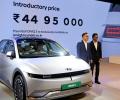
'The semiconductor supply is constantly improving, with visible green-shoots in the situation as compared to earlier part of last year'

The plan is to offer the ratings of drivers to insurers, which can then customise their premiums -- a higher score meaning a lower premium, for instance, and vice-versa.

Reliance has a 24 per cent conversion rate of 'oil-to-chemicals' at present and may be targeting 70 per cent conversion.

A day after he was ruthlessly removed from the Bharatiya Janata Party Parliamentary Board, Nitin Gadkari -- arguably, the top performer in the Narendra Modi Cabinet and a former BJP president -- was in Mumbai, launching one of his pet projects: Electric public transport buses for the city.

The EV industry is at an inflection point and batteries will play a critical role ahead -- batteries and related components typically constitute 35-45 per cent of an EV's costs.

Hopes to launch full-size SUV MG Gloster by Diwali 2020, and have four products in the market in one-and-a-half years of its operations in India.

This year's edition, three years lost to the pandemic and scheduling, wore a distinctive shade of green, and, as would befit an era of technology shift from internal combustion engines to electric motors, had a clutch of high-technology exhibits and concepts. But the excitement of the expo's heyday was missing.

The Centre will invest around Rs 200 crore over five years for the exploration and development of these mines.

Tata Motors has inked a pact to acquire Ford India's Sanand-based manufacturing plant for Rs 725.7 crore, as it aims to bolster its passenger vehicle production capacity. As part of the deal, Tata Motors will get the entire land and buildings, vehicle manufacturing plant along with machinery and equipment situated therein, the Mumbai-based auto major said in a statement. The deal also includes the transfer of all eligible employees, it added.

The Pune-based research institute will design and develop car batteries and offer the technology for mass production.

The Warren Buffet-backed Chinese electric vehicle manufacturer BYD will be unveiling a Born Electric SUV for the Indian market by the fourth quarter of the current calendar year. The deliveries of the same would begin in January, the company's top official said. This will be the first Born Electric SUV in the mass market. The Born Electric models from Tata Motors and Mahindra and Mahindra would be launched from 2024. BYD has been selling the E6 MPV in the Indian market since 2021.

In 2025, India's tech job market is thriving, with tech professionals seeing a 9.5% salary increase and roles like AI/ML architects earning up to Rs 95 lakh annually.

The chances of former workers getting jobs depends on the model under which Ford would restart its Chennai plant operations -- under Ford India or as a joint venture or under any other model.
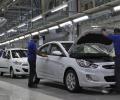
The government has decided to extend the Rs 25,938-crore production-linked incentive scheme for the automotive sector by one year, Union Heavy Industries Minister Mahendra Nath Pandey said on Tuesday. Post extension, the five-year scheme, originally in place from 2022-23 to 2026-27, will be active until 2027-28. At present, incentives are applicable under the scheme for determined sales of Advanced Automotive Technology (AAT) products (vehicles and components) manufactured in India from 1 April 2022 onwards for a period of five consecutive years.

...But sales of domestic passenger vehicles dropped 2% to 3% year-on-year in August owing to low demand.
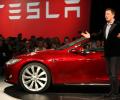
If Tesla comes in, India's position as a manufacturing hub will rise many notches, as it will become only the second country, after China, to have both Apple as well as Tesla.

Prime Minister Narendra Modi's state visit to the US is expected to see discussion on India's possible entry into a US-led global alliance on critical minerals, officials told Business Standard. In June last year, the US, the European Union, and other G7 partners launched the Minerals Security Partnership to ensure that China did not further strengthen its grip on supplies of critical minerals the world over. Various ministries, including the Ministry of Finance, have communicated to the Ministry of External Affairs to explore the possibility of India joining the partnership, officials said.

Ola Electric became the latest among electric scooter (e-scooter) makers to have started the exercise of recalling a specific batch of its model after a rap on the knuckles by the government. Union Minister of Road Transport & Highways Nitin Gadkari on Thursday advised electric vehicle (EV) companies to act responsibly by identifying and recalling defective batches without waiting for orders or guidelines from the ministry. The Bengaluru-based start-up is conducting pre-emptive diagnostics and health check on 1,441 scooters, it said in a statement on Sunday.

India's e-commerce market alone is projected to reach $200 billion by 2026, making it a prime industry for ambitious entrepreneurs, explains rediffGURU Harsh Bharwani.
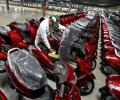
So far at least eight incidents of EV fires have been reported in just over a month's time.

While Maruti held the top spot for four decades, the Ambassador was the best-selling car in post-Independence India for three decades.

Clearly, Foxconn Chairman Young Liu and his team are looking to raise their game in India.

Tata Electronics on Saturday began the construction of its Rs 27,000-crore chip assembly plant in Assam, which is expected to become operational next year and create 27,000 jobs initially. The plant will produce 4.83 crore chips per day using indigenously-developed technologies. The plant's Bhumi Pujan (foundation stone laying) ceremony was held at the project site at Jagiroad in Morigaon district in the presence of Assam Chief Minister Himanta Biswa Sarma and Tata Sons Chairman N Chandrasekaran.

For the first time in history, the luxury car market is poised to cross the sales mark of 50,000 units in 2024, with Mercedes leading the way
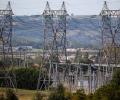
The improving outlook for the power sector has caught the interest of dividend yield funds. In the first four months of the current financial year (2023-24, or FY24), five of the six largest dividend yield funds have shown a notable increase in their exposure to stocks within the power sector. Some have even introduced new stocks to their portfolios.

Passenger vehicle sales in India kicked off on a flat note in new fiscal 2024-25 with 3.38 lakh units sold in April, impacted by high base effect and muted demand due to the ongoing general elections. Dispatches of passenger vehicles from manufacturers to dealers were at 338,341 units in April 2024 as compared to 332,468 units in the same month last year, a growth of 1.77 per cent with major players Maruti Suzuki India, Hyundai and Tata Motors reporting marginal growth in their domestic wholesales.

US President Joe Biden visited the Detroit Auto Show to highlight electric vehicle manufacturing in America.
'The Indian govt's initiatives on EVs are very strong and customers want to buy EVs. This will make the country's conversion to EVs faster than other markets, and I hope even faster than the US'

The much awaited Mahindra e20 launched on Tuesday.

The Tata group is planning to invest $90 billion in new industries such as mobile components plant, semiconductor, electric vehicles, batteries, renewables energy and e-commerce by 2027. The Tata group's investment in India is far higher than the $75-billion investments planned by Mukesh Ambani-owned Reliance Industries and $55-billion investment planned by the Adani group in the next five years in the country, the Economist reported recently. The investment by the Tata group is a shift in its strategy to focus more in the home markets instead of international markets where the group lost money.

Hyundai Motor India expects SUV sales to account for 65 per cent of its overall volumes in 2024, while it gears up to enter the EV segment early next year, aiming to garner 20 per cent of its total sales by 2030, its COO Tarun Garg said on Tuesday. The automaker, which got around 60 per cent of its overall volumes from sports utility vehicle (SUV) sales last year, plans to invest Rs 7,000 crore on its second plant at Talegaon, according to Maharashtra Deputy Chief Minister Devendra Fadnavis. The company officials however declined to comment on the matter.

Asserting that India has full potential to emerge as a global hub for electric vehicles by 2025, Union Minister Nitin Gadkari on Friday asked automobile manufacturers to reduce cost and forego profit initially to capture market and fuel growth. Once the market picks up there will not be any looking back, Road Transport and Highways and MSMEs Minister Gadkari said, promising all support to manufacturers in the initiative aimed at cutting India's huge import costs of crude and arresting pollution. The minister said he is scheduled to make an hour-long presentation on EVs before the Chief Justice of India post-Diwali.

Tesla Inc, the world's largest electric car producer, is looking to make a significant investment in India, said its chief Elon Musk, who saw India as holding more promise than any other large country around the globe. Musk, after meeting Prime Minister Narendra Modi, said he plans to visit India in 2024. "I am confident that Tesla will be in India and we will do so as soon as humanly possible," Musk told reporters after the meeting.

Maharashtra Chief Minister Eknath Shinde on Wednesday said Memorandums of Understanding worth Rs 1.37 lakh crore have been signed at the World Economic Forum (WEF) annual meeting in Davos in Switzerland and termed it as a "big achievement". This will generate employment for one lakh people, said Shinde, who was in Davos to seek investments in Maharashtra. "The MoUs will not remain just on paper," he said, adding that foreign investors have shown trust and faith in the state government.

Her reasoning is simple, "It's a Tata company. No shareholder will let go of this opportunity," she told Business Standard. When asked if the other reason for lining up for the IPO is the technology sector and the fact that the combination of Tata and tech is happening after almost two decades, she replied: "The name of the company and the group matter. Tata means stability and credibility," she added.
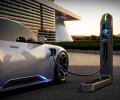
The question is: Will the company have a strong balance sheet to support this massive investment plan?

'Wherever the government has provided incentives for the purchase of two-wheelers, three-wheelers, cars, buses, and trucks, it gets a push for most of these alternate fuels. '

Driven by a rise in sales during the current year, German luxury carmaker Mercedes-Benz said on Thursday that the company is expecting a growth in sales of around 8-10 per cent in the next few years. This comes at a time when the company is ready to surpass the previous highest sales of 15,538 vehicles (2018) in 2022. During the first half, the company sold 7,600 units. It already has an order bank of around 7,000 vehicles. In 2021, the company sold 11,242 vehicles.
